Mass
Heavier walls resist sound. Two layers of 5/8 in. board outperform one layer of 1/2 in. by a wide margin.
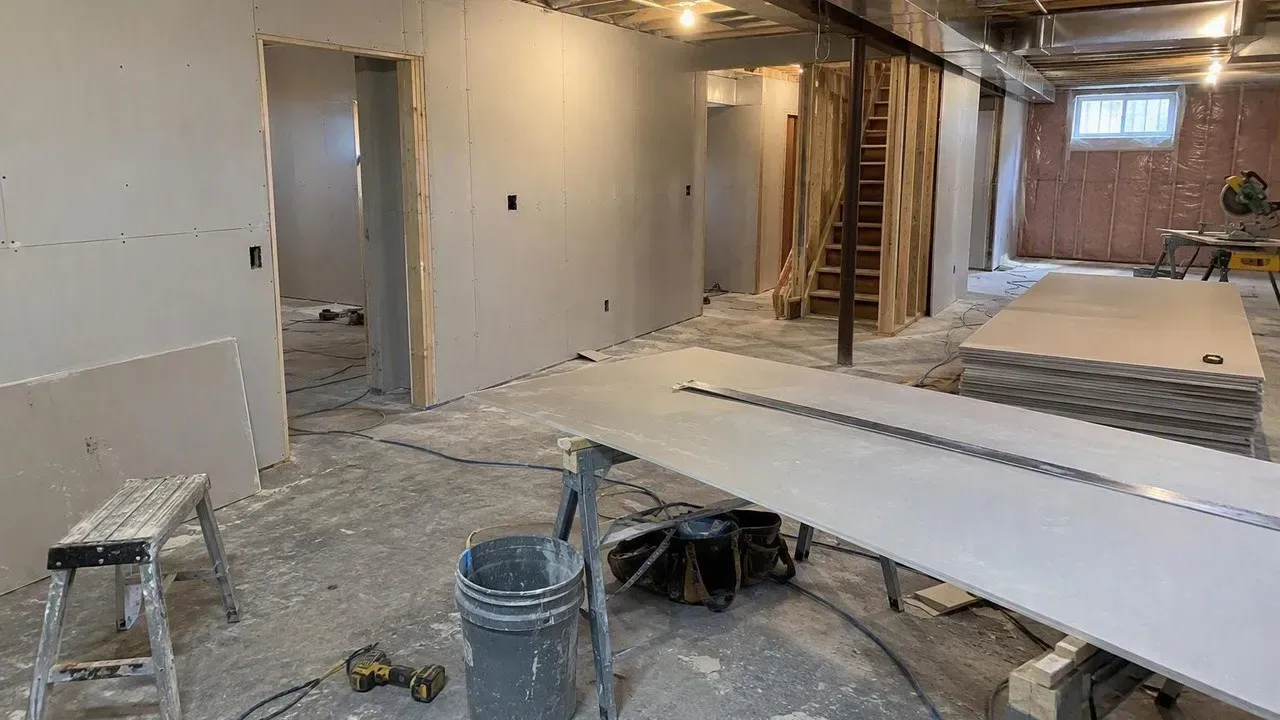
Sound control walls and ceilings
Noise travels through a wall the way water finds a crack, and most walls are built with plenty of cracks. Fort Collins Drywall Pros builds sound-control walls and ceilings in Fort Collins homes, rentals and offices, and has been installing drywall since 2011. We approach soundproofing as an assembly rather than a product, because the whole assembly is what actually changes how a room sounds.
People call us for media rooms and home theaters, home offices next to a noisy kitchen, bedrooms under a family room, and basement ceilings that carry every footstep. Landlords and duplex owners near the Colorado State University campus ask us to quiet the shared walls between units. Noise complaints cost them tenants, and a better wall is cheaper than a vacancy, especially in the older duplexes and converted houses that line the streets around campus.
We explain the realistic result before you spend anything. A properly built assembly can cut normal conversation to a murmur, but low bass and flanking paths like ducts, outlets and doors need attention too. You get a written price that names every material, and every job is backed by more than 1,300 completed drywall projects across Northern Colorado, from basement theaters to shared rental walls.
How soundproofing works
Every effective sound wall uses some combination of these. Skipping one often wastes the money spent on the others.
Heavier walls resist sound. Two layers of 5/8 in. board outperform one layer of 1/2 in. by a wide margin.
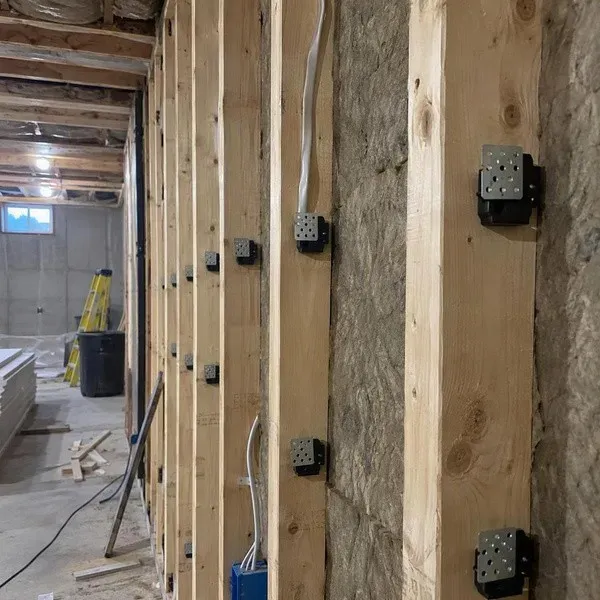
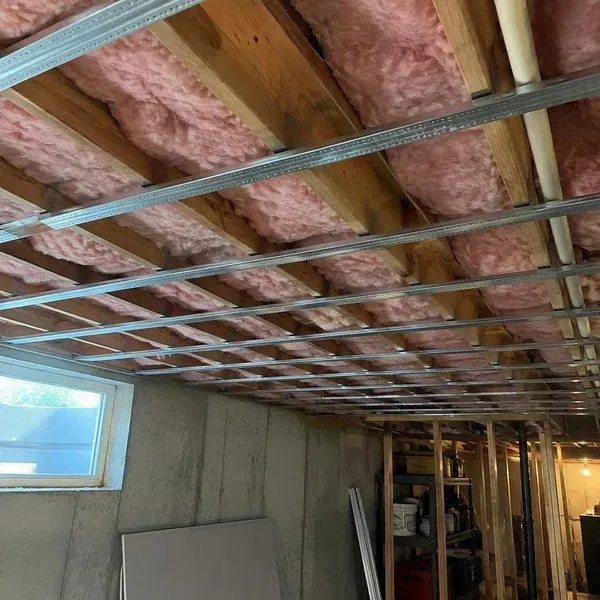
Separating the board from the framing with isolation clips and hat channel stops vibration traveling through the studs.
Viscoelastic compounds such as Green Glue between two layers of board turn sound energy into a small amount of heat.
Mineral wool such as Rockwool Safe'n'Sound in the cavity absorbs sound that would otherwise ring inside the wall.
Acoustic sealant at every edge and backer boxes on outlets. A 1% gap can undo a large share of the improvement.
Ducts, doors, recessed lights and shared framing carry sound around a wall. We point them out and treat what we can.
Compare options
Sound isolation is measured as STC, Sound Transmission Class. Each step up of about 10 points sounds roughly half as loud. These are typical lab ranges; real rooms test lower because of flanking.
| Assembly | Typical STC | What you hear through it |
|---|---|---|
| Standard wall, one layer 1/2 in. each side, empty cavity | About 33 | Normal speech is understood clearly |
| Same wall plus mineral wool insulation | About 36 to 39 | Loud speech is audible but less clear |
| Two layers of 5/8 in. with damping compound on one side, insulated | About 45 to 50 | Loud speech becomes a murmur |
| Isolation clips and hat channel with two layers, insulated | About 50 to 60 | Most speech inaudible, bass reduced but present |
STC figures vary by manufacturer's tested assembly. We specify the tested design on your quote.
Materials and methods
Resilient channel works, but only when it is installed so screws never touch the framing. One screw into a stud short-circuits the whole wall, which is why we prefer isolation clips with hat channel for most rooms: they are more forgiving and perform better.
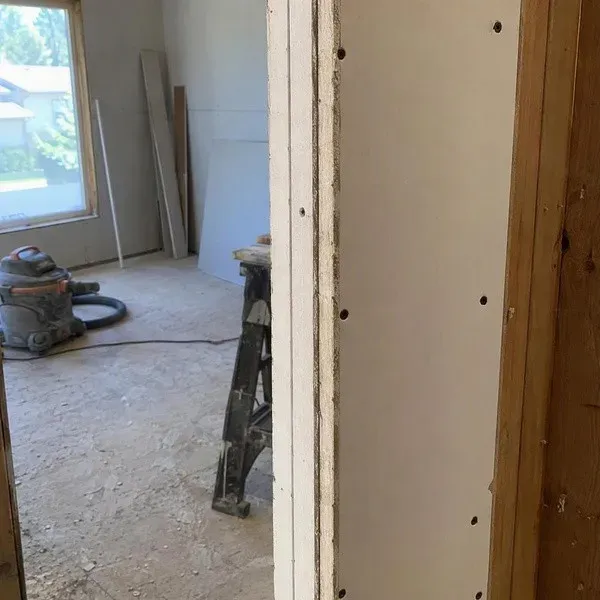
On the board side, we use two layers of 5/8 in. Type X with a damping compound between them, or a pre-laminated panel such as QuietRock or CertainTeed SilentFX where wall thickness has to stay thin. Perimeter joints get acoustic sealant before taping.
Common projects
Usually in the basement, where a decoupled ceiling keeps movie night from shaking the living room. Often combined with basement drywall.
A quiet wall between the office and the kitchen or kids' rooms, plus a solid-core door, makes video calls workable.
Mineral wool and a second layer of board on shared walls are a cost-effective upgrade during a remodel.
Shared walls between units are the biggest source of tenant complaints. Upgrading them during a turnover protects occupancy.
Voices, TV, footsteps or music each need a different approach. Call us and we will recommend the right assembly for the room.
Planning
Soundproofing an existing wall usually means removing the old board on one side, adding insulation, clips and channel, then hanging and finishing two layers. A single wall takes about four to six working days, most of it finishing time.
Price is driven by the assembly you choose, the size of the wall or ceiling, whether existing drywall must be removed, and how many outlets, lights and vents need to be treated. We quote each option side by side so you can see what an extra 10 STC points actually costs.
Keep exploring
New construction, additions, remodels and garages, hung, taped and finished by one crew.
Basement walls, ceilings, soffits and stairwells, built for floating walls, moisture and Fort Collins permits.
Metal framing, board and finish, rated walls, ceilings and tenant finish for GCs, owners and property managers.
Cold-formed steel partitions, soffits, bulkheads and deflection heads, framed to ASTM C754 and ready for board.
Service areas
Our crews run soundproofing jobs across Northern Colorado. These towns have their own pages, written around the homes, codes and permit offices there.
FAQ
Straight answers to what people ask us most. Have a different question? Call or send a photo with the quote form.
It helps, but the assembly matters more than the board. Mass, decoupling, damping, insulation and sealing work together. A single sheet of special board on an otherwise ordinary wall gives a modest improvement.
Yes. Adding a second layer of board with a damping compound over the existing wall is a good upgrade without demolition. For the biggest improvement, we open one side and add clips, channel and insulation.
Footstep noise is impact sound. Decoupling the ceiling below with clips and hat channel, plus insulation and two layers of board, is the most effective drywall-side fix.
It reduces bass, but low frequencies are the hardest to block. Decoupled assemblies with extra mass do best, and we will be honest about what to expect.
Free estimate
Tell us about the job and attach a photo if you can, since most repairs can be priced from a clear photo and a rough measurement. Larger projects get an on-site visit. Either way, you get a written price before any work starts.