Lath and plaster
Plaster Wall Repair in Fort Collins
Before drywall took over in the 1950s, Fort Collins homes were finished in plaster, and thousands still are. Fort Collins Drywall Pros repairs original plaster walls, ceilings and crown moulding in older homes, and has since 2011. It is careful, slower work than drywall, and it is part of what we have learned over 1,300-plus jobs in Fort Collins and the older towns around it.
Our plaster customers own houses in Old Town, the historic neighborhoods around Colorado State University and other pre-war blocks, plus farmhouses and early ranches around the region. Many want to keep the plaster because it is harder, quieter and more solid than drywall. It is also part of the house's character, and once it is torn out it cannot be put back, no matter how carefully the new drywall is hung and finished in its place.
Most plaster can be saved. We re-secure loose sections, rebuild missing areas and repair cracks with materials that bond to old plaster instead of fighting it. Because nearly all of these homes were built before 1978, we are an EPA Lead-Safe Certified Firm and follow lead-safe work practices on every plaster job, with a written price before we start.
What is behind your walls
Plaster and lath in older Fort Collins homes
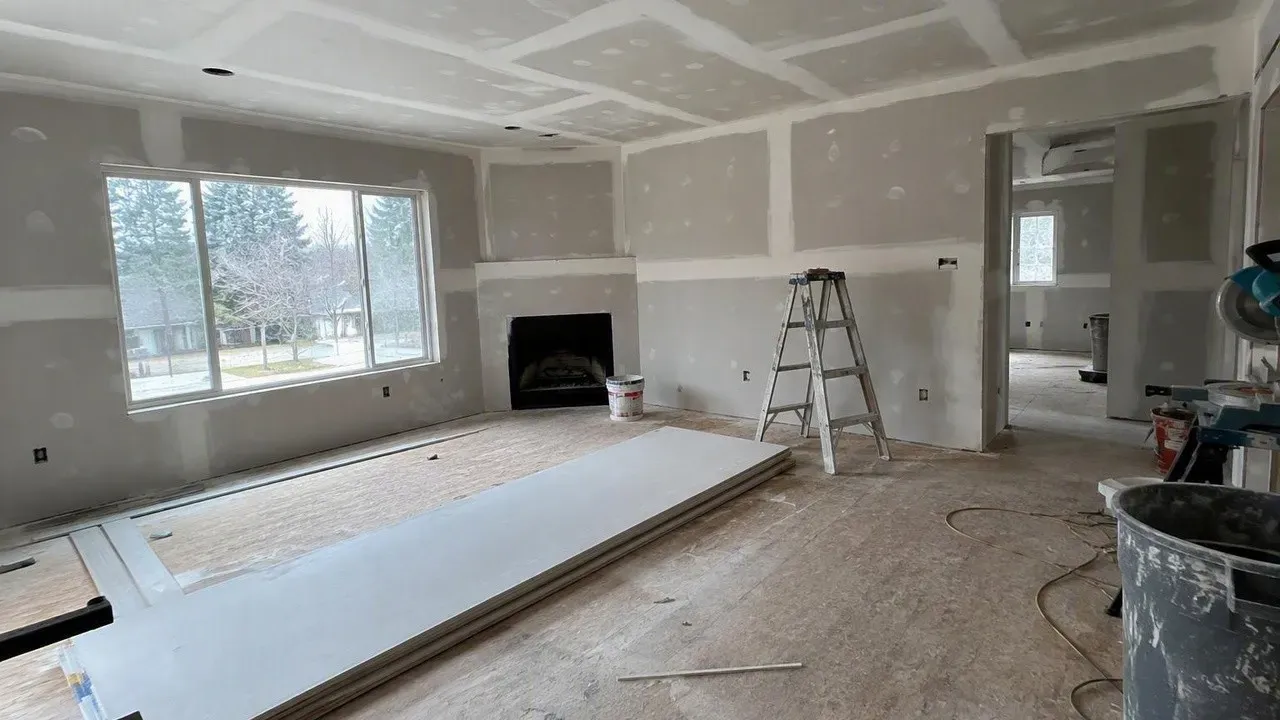
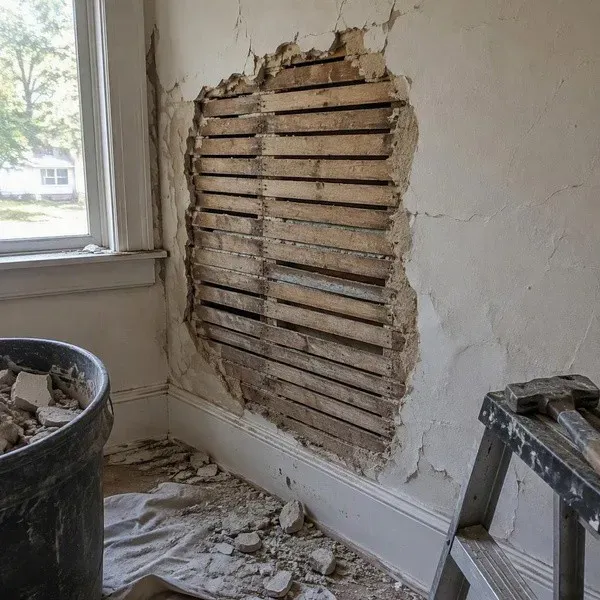
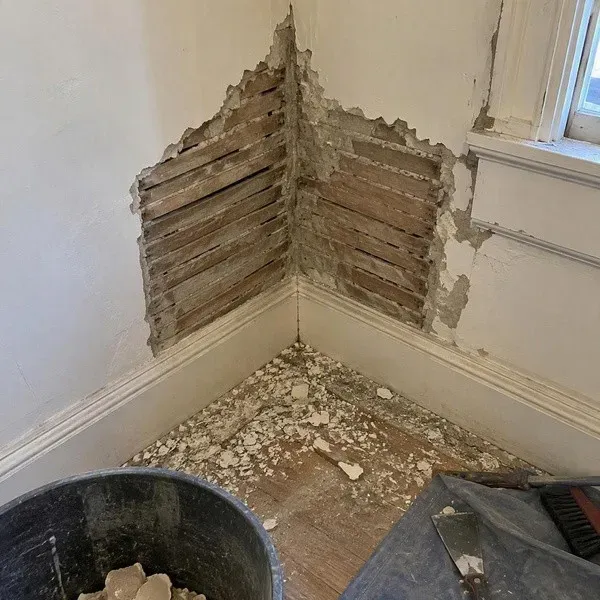
Houses built before the 1930s usually have three-coat lime or gypsum plaster over wood lath, thin strips nailed across the studs with gaps between them. Wet plaster squeezed through those gaps and hardened into keys, which are what hold the plaster to the wall.
From roughly the 1930s into the 1950s, many builders switched to rock lath: 16 by 48 in. gypsum panels with a thinner plaster coat on top. Rock lath looks like drywall from behind but acts like plaster on the surface. Knowing which one you have decides how we repair it.
Plaster problems in this region are mostly movement and water. A century of seasonal swings, settling foundations and old roof leaks breaks keys, opens cracks and loosens ceilings. The good news is that the plaster itself is usually sound.
Repair methods
How we repair plaster instead of tearing it out
Re-securing loose plaster
When keys break, plaster pulls away from the lath and feels spongy when pushed. We re-attach it with plaster washers or injected adhesive systems made for the job, drawing the plaster back tight to the lath.
Repairing cracks
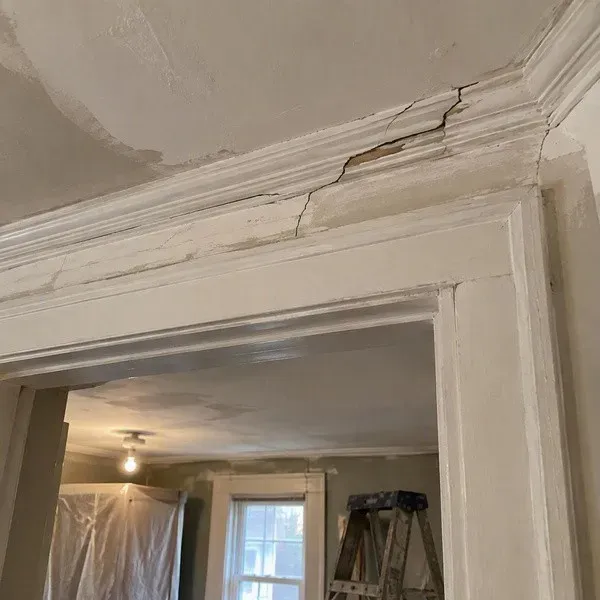
Cracks are opened slightly, cleaned, bridged with fiberglass mesh and filled with setting-type compound that bonds to plaster and stays hard. Premixed drywall mud alone will crack again.
Patching missing plaster
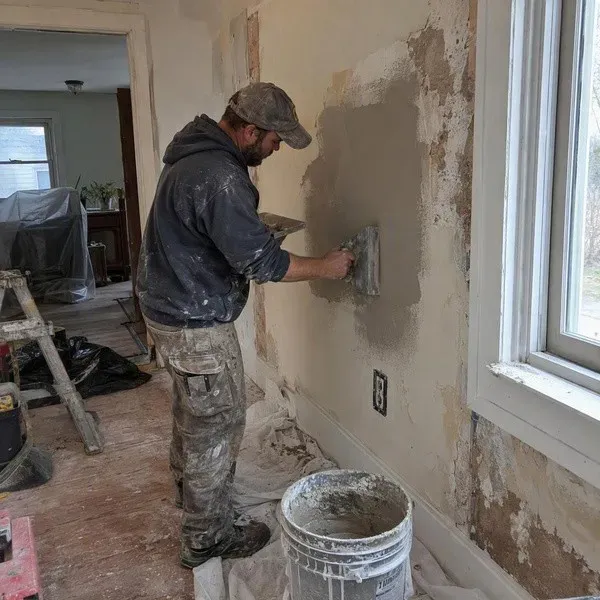
Missing areas are filled in layers with base-coat plaster or setting compound over new lath or a drywall insert, then finished flush with the old surface.
Matching the old surface
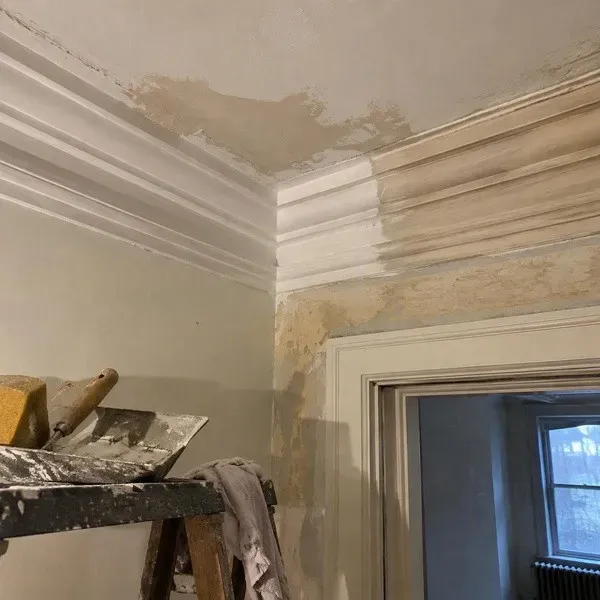
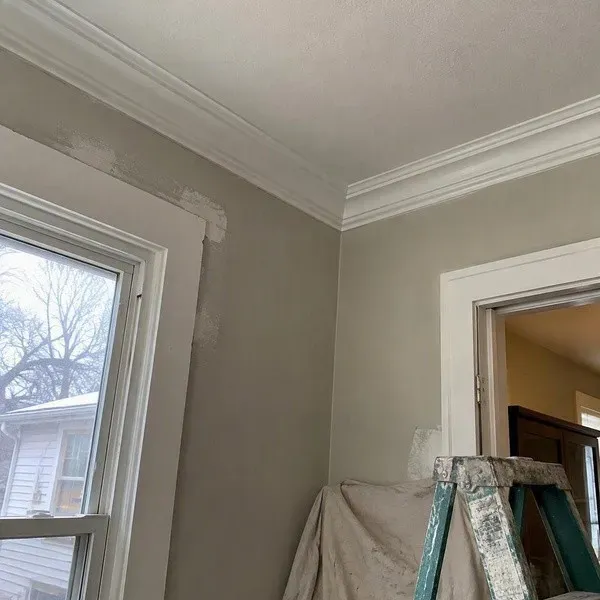
Old plaster has a hard, slightly wavy finish. We match it by hand, not by making the patch perfectly flat, so it does not stand out in raking light.
EPA RRP
Lead-safe work in pre-1978 homes
Paint on plaster in older homes very often contains lead. The EPA's Renovation, Repair and Painting rule requires firms working for pay in pre-1978 housing to be certified and to follow lead-safe practices when disturbing more than 6 sq ft of painted surface inside.
We are an EPA Lead-Safe Certified Firm. On plaster jobs that means containment, no dry sanding or power planing of painted surfaces, HEPA vacuums, careful cleanup and cleaning verification before we hand the room back.
- Work area sealed with plastic and warning signs
- Wet methods and HEPA vacuums, no open dry sanding
- Cleaning verification at the end of the job
Detail work
Crown moulding and decorative plaster
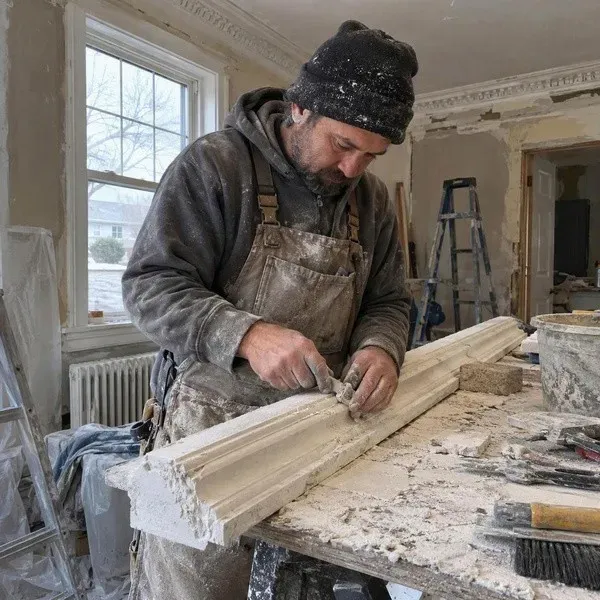
Run-in-place plaster crown and ceiling details are hard to replace and easy to lose. We rebuild missing sections by matching the profile, so the repair continues the original line.
Want to keep your original plaster?
Send photos of the cracks or loose areas. We will tell you honestly whether it can be saved and what it costs.
Plaster vs drywall
Repair the plaster or replace it with drywall?
| Situation | Our usual recommendation |
|---|---|
| Hairline and stable cracks | Repair. Mesh and setting compound, then match the finish. |
| Loose but intact plaster | Re-secure with plaster washers or adhesive, then patch the anchor points. |
| Large holes or missing sections | Patch with new lath or a drywall insert and build up to the old surface. |
| Most of a wall loose, crumbling or water-soaked | Replace that wall with drywall, or laminate new board over the old if the room allows the extra thickness. |
| Remodel with new wiring or plumbing throughout | Often replace, since the walls will be opened anyway. We will talk through keeping plaster in the rooms that matter. |
Keep exploring
Related drywall services
Drywall Repair
Holes, cracks, nail pops, torn paper and corner bead, patched and textured to disappear under paint.
Ceiling Repair
Ceiling cracks, sagging board, leak stains and holes from moved lights, repaired and textured to match.
Texture Matching
Knockdown, orange peel, skip trowel and hand textures matched to your walls, plus full texture changes and smooth-wall conversions.
Drywall Finishing
Taping, mudding and Level 4 or Level 5 finishes, including skim coating and finish-only work for builders.
Service areas
Plaster Repair beyond Fort Collins
Our crews run plaster repair jobs across Northern Colorado. These towns have their own pages, written around the homes, codes and permit offices there.
FAQ
Plaster Repair questions
Straight answers to what people ask us most. Have a different question? Call or send a photo with the quote form.
Can cracked plaster walls be repaired, or do they need drywall?
Most cracked plaster can be repaired. As long as the plaster is still attached, or can be re-attached, repair is usually cheaper and keeps the walls solid and quiet. Replacement makes sense when large areas are crumbling or soaked.
Why does plaster crack?
House movement, settling foundations, seasonal humidity swings and old water leaks. When the keys behind the plaster break, sections loosen and crack more.
Do you follow lead-safe practices?
Yes. We are an EPA Lead-Safe Certified Firm, and we use containment, wet methods and HEPA cleanup on plaster in pre-1978 homes.
Can you repair plaster crown moulding?
Yes. We repair cracks and chips and rebuild missing sections to match the original profile.
Could my plaster contain asbestos?
Some older plaster and textures did. If testing has not been done, we recommend sampling by a certified inspector before large areas are disturbed, which is also what Colorado's rules expect before renovation.